


What Kindergartners Taught Me About Explaining My Business (And Why You Should Try This Too)
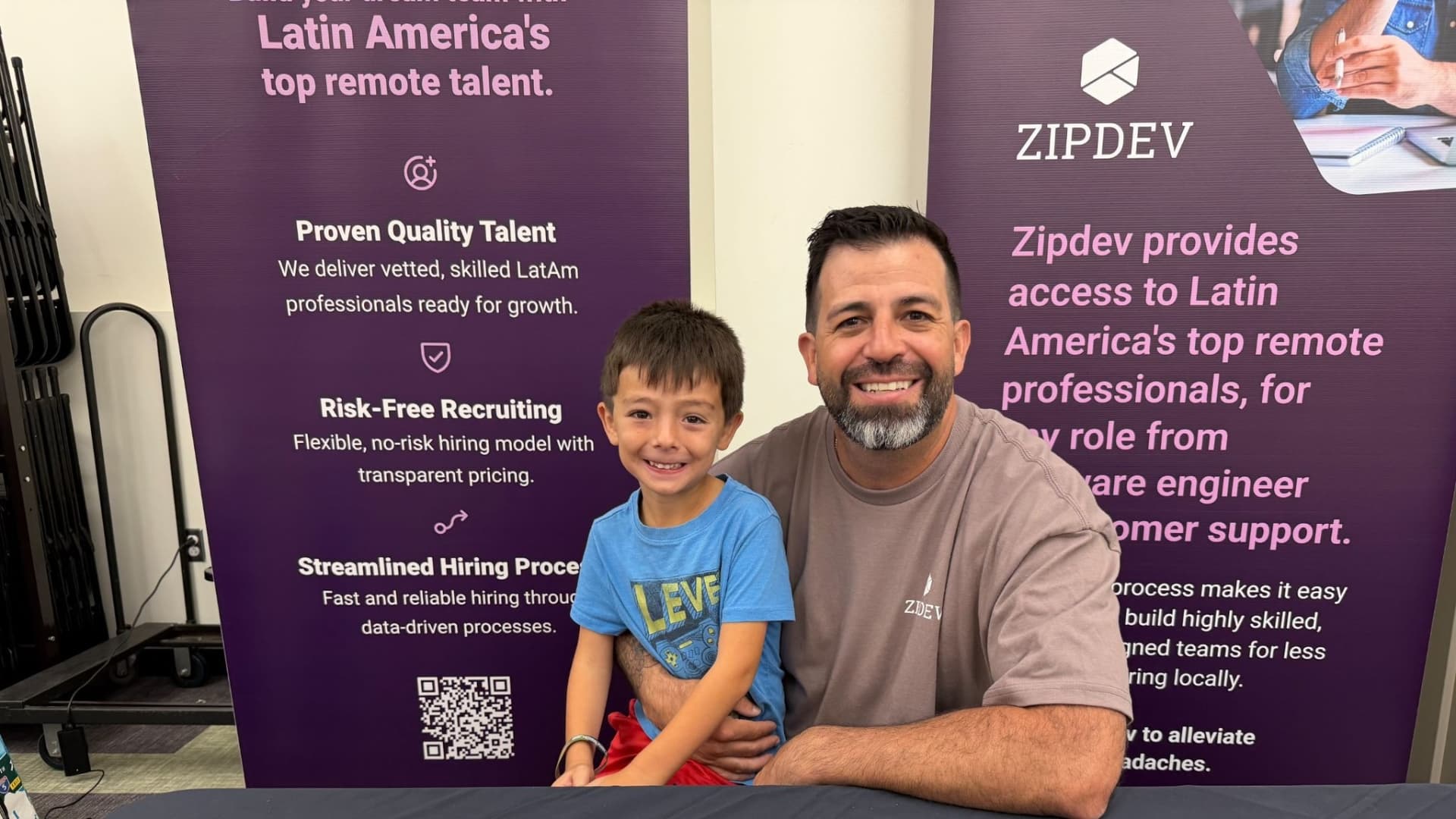
A few weeks ago, I had a pretty unique experience. My kids go to a Spanish immersion school, and since Zipdev recruits talent from Latin America, I figured, “Hey, Latin American recruiting, Spanish-speaking school… I might as well throw my name in the hat.” So I signed up for Career Day, thinking it would be fun.
I got selected, and I was pumped. I’d get to see my kids, meet their classmates, and talk about what we do at Zipdev.
Then reality hit.
How do you explain a professional services business to a kindergartner? Seriously. How do you explain remote staffing to a five-year-old? I don’t have a product to show them. I don’t have something they can hold or touch. I have to explain a service… to a kid staring right at me.
As the day got closer, I found myself thinking about it more than I expected. Not stressed, but definitely challenged. It forced me to step back and ask a simple question: how do I make what we do so simple that anyone can understand it? Especially a five-year-old.
So I workshopped it. A lot. And honestly, it was pretty fun.
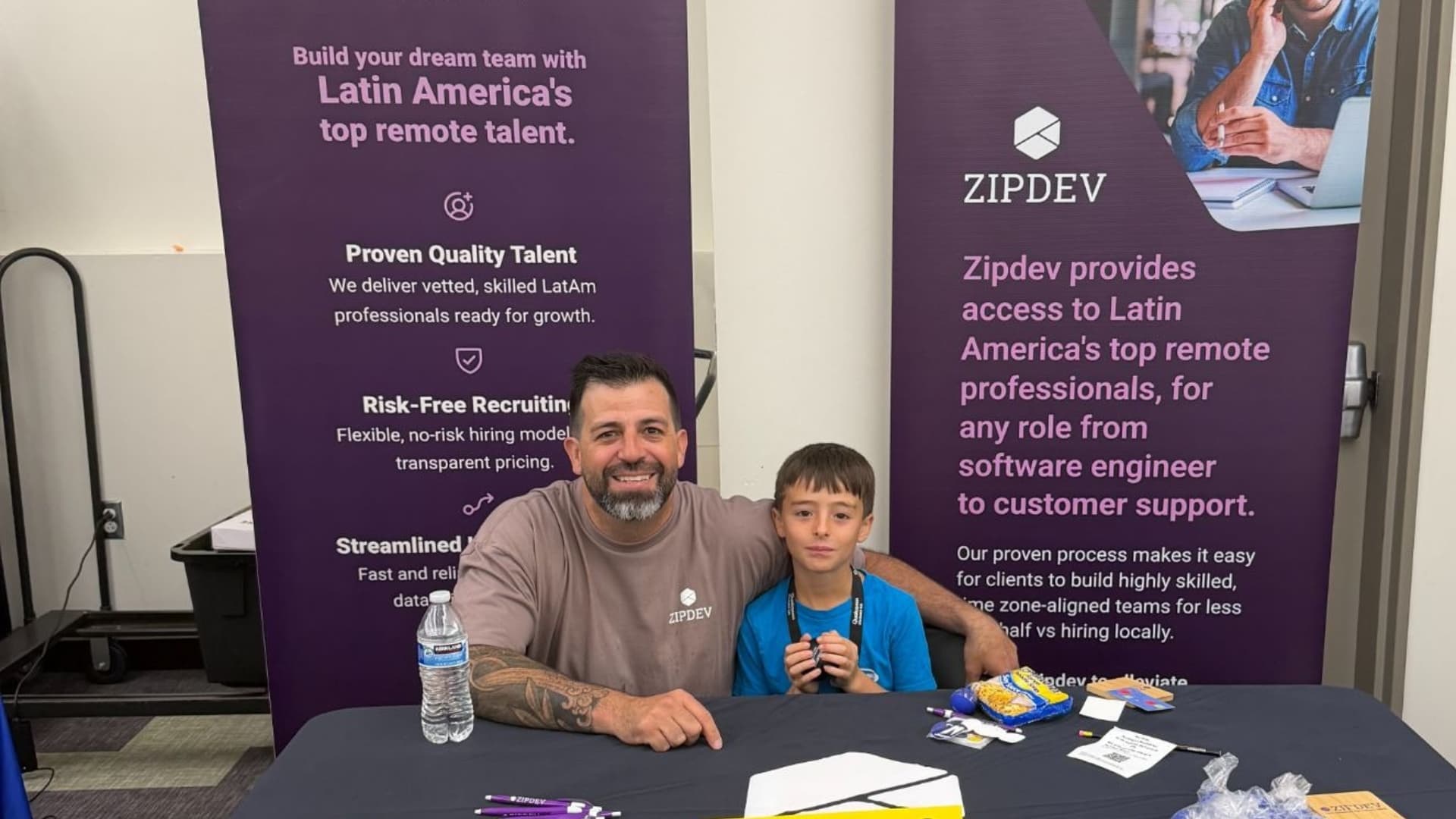
When the day came, I was set up next to firefighters, police officers, doctors, scientists, people from Qualcomm, and a few lawyers. Safe to say, I wasn’t the main attraction. As the kids ran in, they went straight to the firefighters and police.
Eventually, they made their way over to me.
With the younger kids, I started with something they knew. “Have you ever built a Lego set before?” Of course, all hands went up. Then I asked them to imagine building one with 5,000 pieces. Their eyes got big. A few kids yelled, “What about a million Legos?”
That’s when I said, “You’d probably need help, right? Maybe one friend opens the bags. Another sorts the pieces. Another reads the instructions. Another builds the wheels. Could you imagine how long it would take to build that on your own?”
Then I brought it home.
“My job is to find you those friends. That way you can build it faster, together, and move on to the next big Lego set.”
That’s it. That’s what we do. We help companies find the right people so they can build something bigger than they could on their own. And just like that, they got it.
As I moved up in grades, the message evolved. With older kids, I asked about their hobbies. A lot of them were into sports, so I used that.
“Let’s say you want to build a soccer team. You need players, a coach, someone to manage the field, someone to sell tickets. My job is to help you find all those people.”
Now it started clicking in a different way. They understood teams, roles, and how different people come together to make something work.
I also wanted to plant the seed of entrepreneurship. That was important to me.
So I asked, “What’s an entrepreneur?”
Half the kids couldn’t even say the word. Fair enough. So I simplified it.
“It’s like creating your own game. Instead of playing by someone else’s rules, you make your own.”
“Ooooo,” one kid said. That landed.
Of course, another kid asked, “Do you make a lot of money?”
I laughed. “Sometimes. But the best part is I get to decide how I spend my time. I get to build something I care about. And I get to do things like come talk to you today.”
That’s what I wanted them to walk away with. Not job titles. Not resumes. Just the idea that they can take something they enjoy and turn it into something bigger. Kids are naturally curious. They imagine and create way better than we do as adults. Hopefully something I said sparked that for them.
What surprised me the most is that I went into Career Day thinking I was going to teach the kids something. What actually happened is they taught me something.
They forced me to simplify. They forced me to cut the jargon. They forced me to explain what we do in a way that actually makes sense.
And honestly, it made me better. Better at pitching, better at communicating, and better at understanding my audience.
It also made me realize something we all fall into. As business owners, we love to complicate things. We throw around buzzwords, workshop taglines, bring in consultants, and try to sound polished. But in doing that, we sometimes lose the plot.
Because at the end of the day, if you can’t explain what you do in a way that a five-year-old can understand, there’s a good chance your message isn’t as clear as you think it is.
When you break it down that simply, there’s no confusion. No guessing. People just get it.
Because here’s the truth. If you can’t explain what you do to a kindergartner, you probably don’t understand it as well as you think you do.
So here’s a simple exercise that I think every founder, operator, or leader should try. Ask your kids what they think you do. The answer will probably surprise you. Then try explaining your business in their language. No buzzwords. No industry terms. Just real, simple examples. Use analogies like Legos, sports, or games. Pay attention to where they get confused, because that’s probably where your messaging breaks down for adults too.
Career Day turned out to be one of the best exercises I’ve done in a while. Not just because I got to hang with my kids and hopefully inspire a few future entrepreneurs, but because it forced me to get clear on what we actually do and why it matters.
If you ever get the chance to do something like this, take it. And if you’ve done it before, I’d love to hear how you explained what you do. Always fun to compare notes.
A Simple Exercise Every Founder Should Try
If you’re a founder, operator, or leader, try this:
Ask your kids what they think you do. The answer will probably surprise you.
Explain your business in their language. No buzzwords. No industry terms. Just real, simple examples.
Use analogies. Legos, sports, games, whatever clicks.
Pay attention to where they get confused. That’s probably where your messaging breaks down for adults too.
This is one of the simplest ways to sharpen how you communicate your business.
Stay in touch, Daniel